
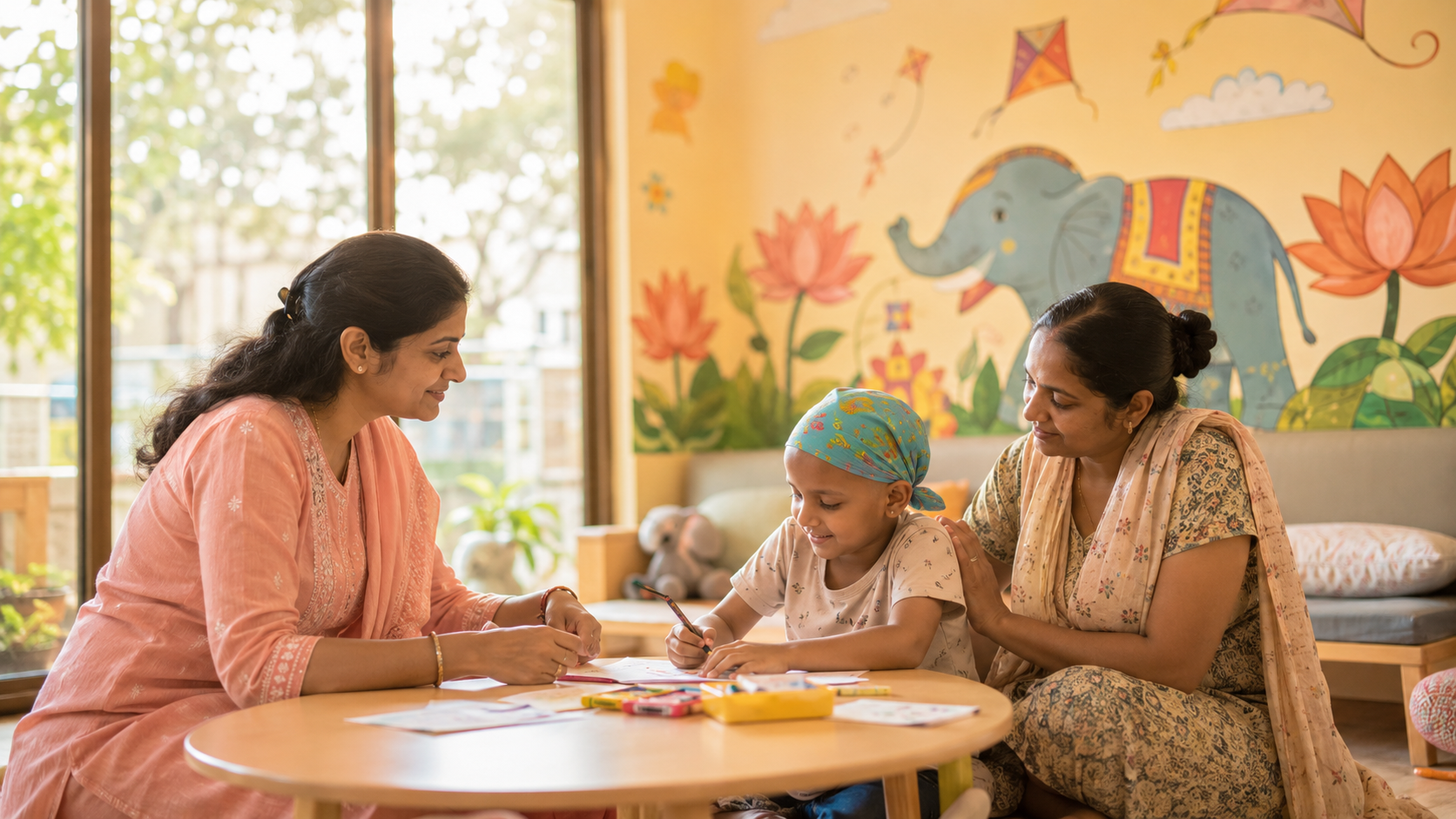
Families in New Delhi navigating a child’s cancer diagnosis have access to a meaningful network of medical institutions, nonprofits, and community organizations. Key resources include AIIMS New Delhi, RGCIRC, CanKids KidsCan, the Cancer Patients Aid Association (CPAA), and St. Jude India ChildCare Centres each offering distinct forms of medical and non-medical support. But beyond hospitals, the city’s ecosystem of childhood oncology resources in Delhi extends to accommodation assistance, psychosocial counseling, parent support groups, and educational continuity programs.
When the Diagnosis Changes Everything
A family from a small town in Uttar Pradesh arrives in New Delhi with a seven-year-old who has been losing weight for months. The pediatrician at home suspected a common infection. But the tests told a different story. Now they’re sitting in a waiting room at a major Delhi hospital overwhelmed, far from home, and with no idea where to turn after the oncologist leaves the room.
That scenario plays out for thousands of families each year. And while a cancer diagnosis in a child is among the most difficult things a family can face, pediatric cancer support in New Delhi has grown substantially. The city is home to some of India’s most capable childhood cancer programs, as well as a network of nonprofits, civic organizations, and community-driven resources that reach well beyond the clinic.
This guide maps out what’s available from specialized hospitals to nonprofit pediatric healthcare India has developed over recent decades.
The Scale of the Challenge
Based on recent data, it’s estimated that 10–12 children per 1,00,000 population develop cancer every year. In India, with a population of over a billion, that’s roughly 50,000 children each year many of whom go undiagnosed or without adequate treatment.
The numbers behind treatment access are sobering.
Of those children, only 15–20% roughly 10,000 are able to reach a cancer unit. And among those who do, 40–50% drop out of treatment.
But there’s also reason for measured optimism.
These cancers are very fast growing but also very sensitive to proper treatment. Although treatment is complex and often long, cure is a very realistic and practically achievable goal.
New Delhi, as a hub of specialized medical care, has been central to improving those outcomes.
Leading Hospitals for Child Cancer Treatment India
AIIMS New Delhi and the Rotary Cancer Hospital
Few institutions in India carry more weight in childhood oncology resources Delhi than AIIMS.
The All India Institute of Medical Sciences (AIIMS) stands out for its comprehensive pediatric cancer care, including highly specialized surgical interventions performed by experienced pediatric oncologists and surgeons. AIIMS’s state-of-the-art facilities and research capabilities make it a premier destination for complex pediatric cancer treatments in North India.
Within AIIMS, the Dr. B.R. Ambedkar Institute-Rotary Cancer Hospital (BRAIRCH) plays a central role.
BRAIRCH at AIIMS is a dedicated, state-of-the-art facility for comprehensive cancer care. It integrates advanced diagnostic capabilities with multidisciplinary treatment approaches, focusing on both common and rare malignancies. With a commitment to research and innovation, BRAIRCH provides personalized treatment plans, utilizing cutting-edge technology and a team of highly experienced oncologists.
The Rotary cancer care India connection here is longstanding CPAA’s Delhi Branch was initiated in 1979 in partnership with the Rotary Club at the Rotary Cancer Hospital.
Rajiv Gandhi Cancer Institute and Research Centre (RGCIRC)
RGCIRC is another anchor institution for child cancer treatment India.
The Department of Pediatric Hematology Oncology at RGCIRC is unique in India, as it offers comprehensive oncology care to all children up to the age of 18 years.
The support model there goes well beyond chemotherapy.
Patients benefit from comprehensive multispecialty care including chemotherapy, pediatric surgical oncology, radiotherapy, and supportive services a nurse coordinator, dietician, counselor, teacher, and play therapist.
Other Specialized Centers
Apollo Hospital in Delhi offers specialized pediatric oncology services, including minimally invasive surgical options and integrated care pathways. The hospital’s team comprises leading pediatric surgeons, oncologists, anesthetists, and supportive care specialists committed to personalized treatment plans. Their focus on multidisciplinary management ensures that children receive holistic care tailored to their specific needs.
Max Healthcare and BLK-Max Super Speciality Hospital both maintain dedicated pediatric oncology programs.
BLK-Max has one of the largest Bone Marrow Transplant centres in Asia, offering autologous and allogeneic bone marrow transplants, supported by a team of nationally and internationally trained experts treating a range of diseases in haematology, oncology, and immunology.
Nonprofit Pediatric Healthcare India: Who’s Filling the Gaps
Hospitals treat the disease. But the journey is far longer than any hospital stay. Accommodation, nutrition, transport, emotional health, and education all become urgent issues for families especially those who’ve traveled from outside Delhi.
CanKids KidsCan
CanKids KidsCan is arguably the most comprehensive nonprofit pediatric healthcare India organization dedicated exclusively to childhood cancer.
Founded in 2004 by Poonam Bagai, herself a cancer survivor, CanKids KidsCan the National Society for Change for Childhood Cancer in India partners with hospitals, medical professionals, and state governments to enable access and best standards of treatment, care, and support across 60 cities and 22 states of India.
Their YANA (“You Are Not Alone”) program covers a striking breadth of needs.
Through the YANA program, CanKids provides medical, drugs and diagnostics support, accommodation through Home Away from Homes, patient transport, blood support, nutrition and rations, education, and counselling support.
The organization’s Delhi-based Subhita center is particularly notable.
Subhita is India’s first and only 10-bedded, 24-hour pediatric palliative care center providing day-care and both inpatient and outpatient services, located in New Delhi.
Their CanShala program addresses something often overlooked: a child’s education doesn’t have to stop during treatment.
CanShalas are a school-at-the-hospital concept designed to ensure continued education for children undergoing cancer treatment.
Each CanKids Hospital Support Unit has a social support team a cadre of trained people including social workers, data managers, dietitians, teachers, psychologists, volunteers, patient navigators, and care coordinators.
Cancer Patients Aid Association (CPAA) — New Delhi Branch
CPAA’s Delhi branch has been serving families for decades, with a particularly strong focus on underprivileged children receiving treatment at AIIMS.
Over 14 years, their collaboration with the Manmohini Kaul Cancer Fund (MMKCF) has provided complete cancer treatment for 340 childhood cancer patients and enabled 12,641 chemotherapy sessions. These children, hailing from underprivileged families in and around New Delhi, receive their treatment at AIIMS.
The support isn’t limited to medical costs.
The support extends far beyond medical treatment. CPAA, through MMKCF’s backing, also provides nutritious diets, travel assistance, and accommodation to ensure that no child misses treatment due to logistical or financial constraints.
Organizations such as the Rotary International Foundation and Rotary Club of Delhi Garden City have further enhanced the scope of CPAA’s Patient Aid initiatives.
That Rotary cancer care India dimension has meaningfully expanded the reach of CPAA’s work across Delhi and NCR.
St. Jude India ChildCare Centres
For families traveling to Delhi from other states, finding safe and affordable accommodation near hospitals is one of the most pressing challenges.
Many families are lured into unhygienic housing by touts, which adversely impacts a child’s treatment. Lack of decent accommodation also leads to the abandonment of treatment, as chemotherapy can last for six months or more.
St. Jude India ChildCare Centres addresses exactly that problem.
With 41 centers across 11 cities, their mission is to offer a clean, safe, and cost-free environment along with holistic care for children with cancer and support for their parents. They serve underprivileged children with cancer regardless of economic background, providing free safe and hygienic housing near treatment centers, transport to and from hospitals, cooking facilities and nutritious rations, and value-based education and counseling.
Psychosocial Support: The Part Families Often Overlook
Medical care addresses the body. But the emotional toll on a child and on the entire family is substantial and well-documented.
When children are diagnosed with cancer, the entire family system is disrupted. Psychological support for the family aids in better treatment adjustment and coping, supporting the demands of intensive and lengthy cancer treatments.
Despite the need, formal psychosocial services remain uneven across India.
A few dedicated psycho-oncologists serve at major pediatric cancer centers, but formal psycho-oncology services remain scarce. Clinical services are mostly focused on large hospitals in metro areas, with limited reach to smaller towns.
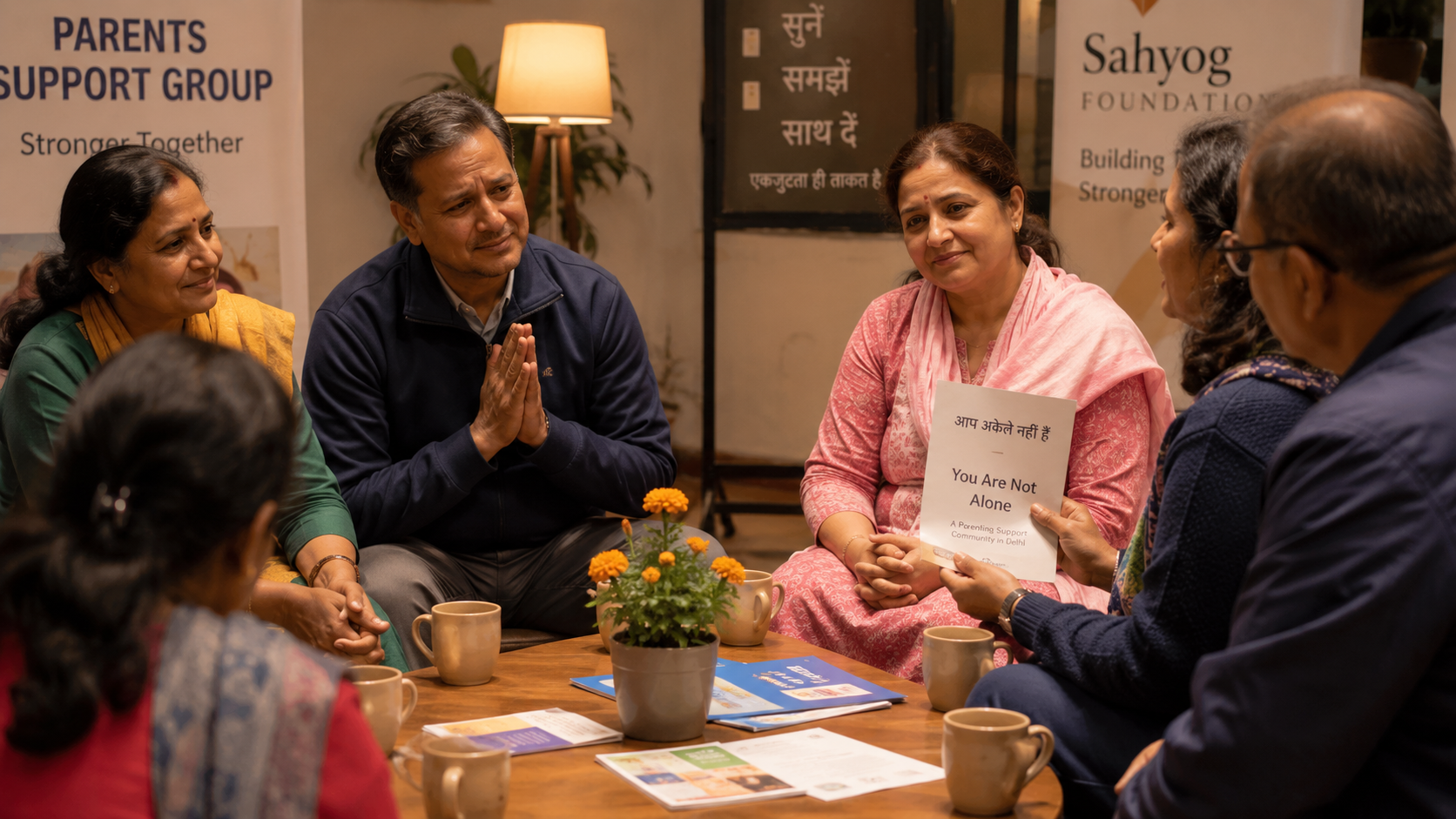
The journey of caring for a child with cancer can be overwhelming for parents, filled with challenges that extend beyond medical treatment. Recognizing the importance of emotional support, various organizations in India offer support groups tailored to the needs of parents and families of pediatric cancer patients.
Parent-to-parent programs like P3SG allow families with direct experience of childhood cancer care to serve as advocates and navigators for newly diagnosed families a form of support that no medical textbook can fully replicate.
FAQ: Pediatric Cancer Support New Delhi
Q: What is the first step if a child is suspected to have cancer in Delhi?
A: Parents should seek a referral to a pediatric oncologist without delay.
Information and support are crucial for families navigating childhood cancer. Understanding the disease and treatment options can help alleviate confusion and prepare families for the journey ahead.
AIIMS, RGCIRC, Max, and BLK-Max all have dedicated pediatric oncology units.
Q: Are there free or subsidized resources for families who can’t afford treatment?
A: Yes. Several organizations provide meaningful financial assistance alongside medical support.
CanKids’ vision is to enable global standards of survival for childhood cancer in India and to ensure that no child should suffer for want of cancer treatment due to lack of finance.
CPAA’s Delhi branch similarly supports underprivileged families through AIIMS.
Q: How can families from outside Delhi access support while staying in the city for treatment?
A: Accommodation is a key concern.
CanKids operates Home Away From Homes low-cost accommodation near cancer care centers for children and their families for the duration of treatment.
St. Jude India ChildCare Centres offers comparable support through its own network.
What Families Should Know Before They Start
Navigating pediatric cancer support in New Delhi doesn’t require finding a perfect solution on day one. The resources outlined here exist precisely because no single institution can meet every need. Hospitals provide the clinical care. Nonprofits like CanKids and CPAA bridge the financial and logistical gaps. Support groups address the emotional weight that medication cannot.
Pediatric cancer care requires specialized facilities designed to meet the specific needs of children, usually through a team that includes pediatric oncologists, surgeons, radiation oncologists, and pediatric oncology nurses. Additionally, supportive care services such as psychologists, rehabilitation specialists, and social workers are essential to cater to young patients’ growth and developmental needs.
Families don’t have to navigate this alone. The ecosystem of childhood oncology resources in Delhi across hospitals, NGOs, and community organizations is more interconnected than it may appear from the outside. The first step is simply knowing where to look.